Switzerland in Summer: A Family Guide to the Alps, Lakes and Panoramic Trains
 Simply Team
4 min read
Simply Team
4 min read
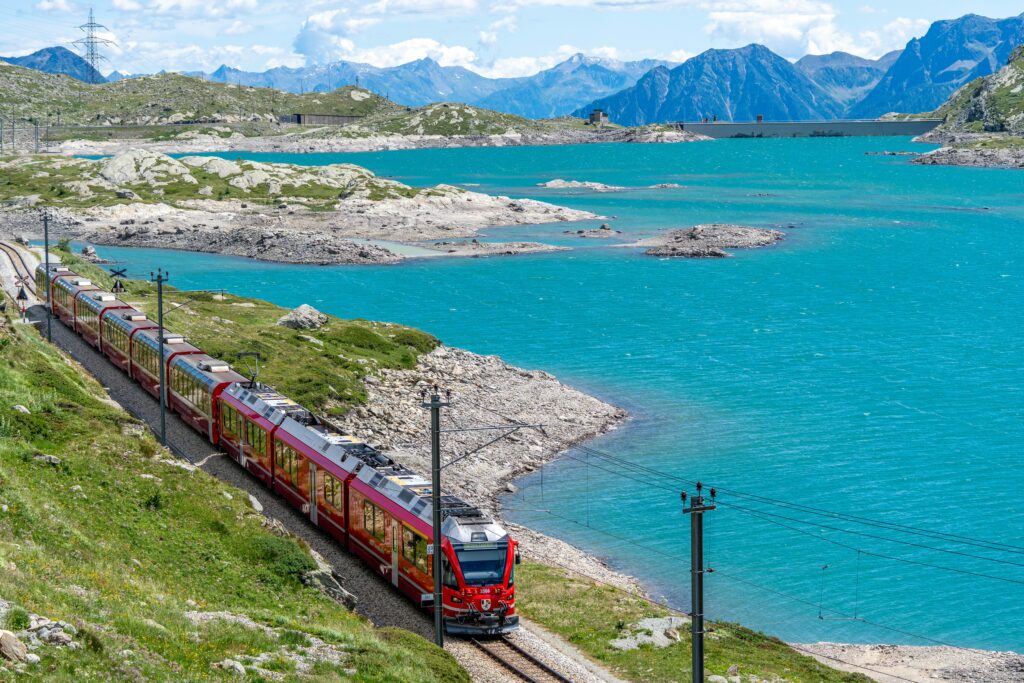
When the Gulf heat peaks, Switzerland becomes the family destination of choice: snow still sitting on the summits in July, turquoise lakes at the foot of the mountains, and panoramic trains threading through some of the finest scenery in Europe. The country is compact and the rail network is precise to a degree that surprises first-time visitors, which means you can base yourself in one town and reach most of the rest on day trips without ever renting a car.
Why Switzerland in summer
Because the climate stays mild even at the height of the season, and every hundred metres of altitude buys you cooler air. You can leave your hotel in pleasant morning warmth and be standing in snow an hour later. That contrast is what makes it work so well for families: there is something at every elevation, from green meadows to glaciers.
Interlaken and the heart of the Alps
Interlaken sits between Lake Thun and Lake Brienz and is the classic base for the Jungfrau region. From there you can climb to Grindelwald with its sloping meadows, or to Lauterbrunnen, where waterfalls drop straight off the valley walls. The rail journey up to Jungfraujoch reaches one of the highest railway stations in Europe.
Lucerne and its lake
Lucerne is quieter and more classical: the covered wooden Chapel Bridge, an old town you can walk end to end in a couple of hours, and a lake with ferries running out to the villages around it. From the city itself you can ride up Mount Pilatus, or on to Titlis, which holds its snow year round.
Zermatt and the Matterhorn
Zermatt is car-free and reachable only by train, and above it stands the Matterhorn with a pyramid profile unlike any other peak. The Gornergrat railway carries you to an open view of the summit with glaciers spreading out below. The quiet here is different from anywhere else in the country.
The panoramic trains
If you have a full day to spare, let the journey be the destination. The Glacier Express crosses the country from Zermatt to St Moritz over bridges, through tunnels and along deep valleys. The Bernina Express runs south between glaciers and high lakes. The GoldenPass links Lucerne to Montreux on Lake Geneva. The panoramic windows turn the entire route into one continuous view.
Staying connected between the valleys and the peaks
Coverage in Swiss towns is excellent, but the signal wavers in the long tunnels and the deep valleys between mountains. That is exactly why sorting out connectivity before you travel matters more than it first appears, particularly if you are relying on maps and rail bookings on your phone.
Switzerland is included in the Europe Bundle, which covers 40 European destinations on a single plan with speeds up to 5G where available. If your trip continues into France, Italy or Austria along the way, the bundle means you change nothing at any border. And if you are weighing a single-country plan against the European one, we broke down the difference in our Schengen summer guide.
Practical notes before you go
- Download offline maps before any mountain day, especially for the Lauterbrunnen valley and the mountain rail routes.
- Install your plan on stable Wi-Fi before you leave the airport, then activate it on arrival.
- Your main number keeps working for calls and messages while data runs on the travel plan.
- Book the well-known mountain trains early in summer, as seats sell out in peak weeks.
- Check that your handset supports eSIM before you buy, on the device compatibility page.
- Confirm entry and visa requirements from official sources before booking flights.
Full setup steps are in the installation guide. Get your plan ready before takeoff, so you land in Zurich or Geneva already connected.

Written by
Simply Team