When the summer heat lifts from southern Spain, Andalusia is at its best. October and November bring warm days made for long walks, cool evenings in old squares, and far lighter crowds at the big sights. For Arab travelers this is more than a sightseeing trip: in every corner of Granada, Cordoba, and Seville there is a trace of a history we already know well.
Why autumn?
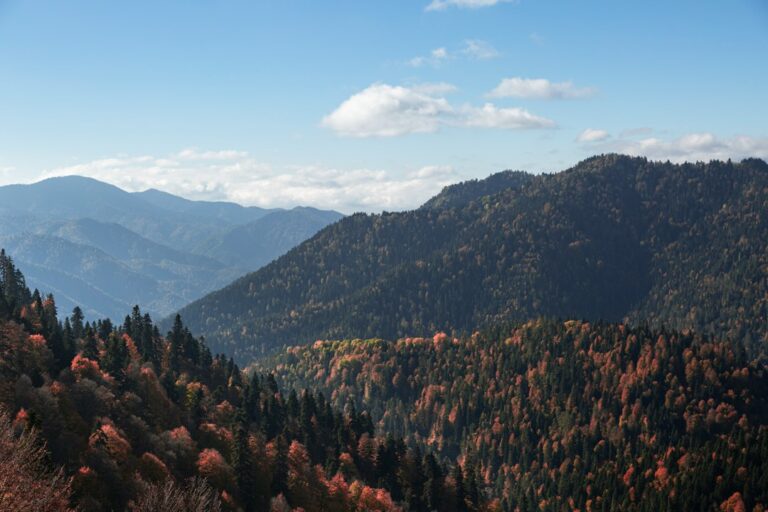
In summer, Seville and Cordoba get hot enough to make daytime walking a chore. In autumn the weather settles and the cities slip back into an easy rhythm. Pack a light jacket for evenings, especially in Granada, which sits higher up at the foot of the Sierra Nevada, plus a small umbrella for rainy November days. As autumn ends, the olive harvest begins across the Andalusian countryside, and the groves roll past your window between cities.
Granada: the Alhambra and the Albaicin
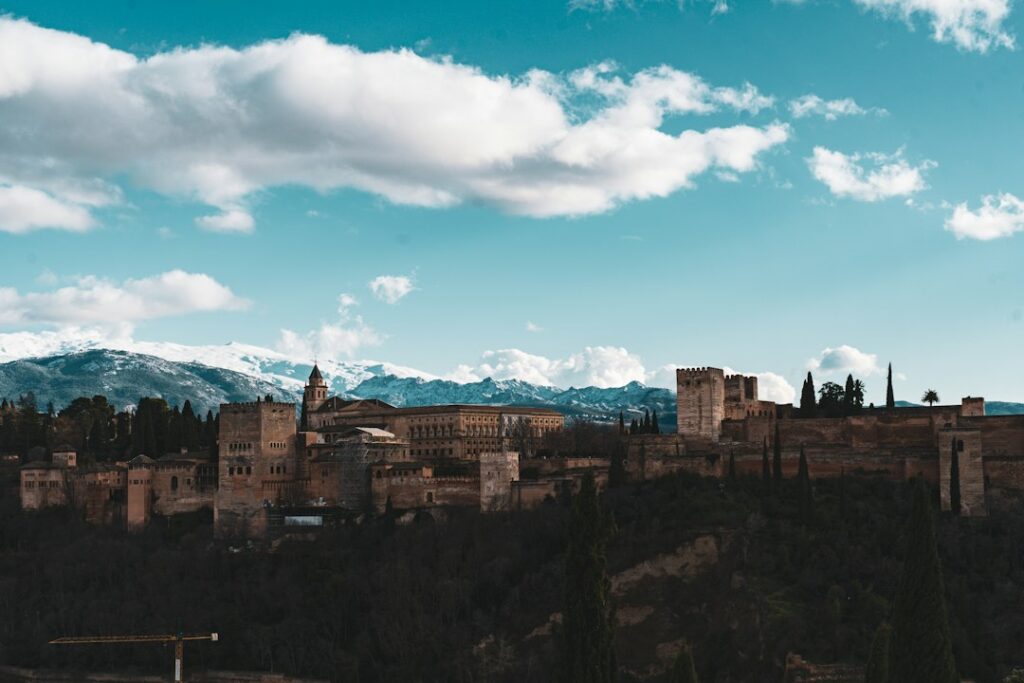
For many travelers the Alhambra is the reason for the whole trip, and it deserves at least half a day: the Nasrid Palaces with their carved stucco and courtyards, the Alcazaba fortress, and the Generalife gardens. The key detail is that entry to the Nasrid Palaces is tied to a time slot printed on your ticket, and if you miss it you will not be let in. Book on the official site well before you fly, since tickets sell out early, carry your original passport as it may be checked at the entrance, and arrive about an hour before your slot.
After the Alhambra, climb into the Albaicin, the old quarter of white winding lanes on the hill facing the Alhambra, and wait for sunset at the Mirador de San Nicolas, where the palaces glow across the valley with the Sierra Nevada behind them. The lanes are narrow and look alike, and your location can drift on the map between high walls, so download an offline map of Granada before you set out and share your live location with your family.
Cordoba: the Great Mosque and Madinat al-Zahra
In Cordoba stands the Great Mosque, the Mezquita, with its forest of red and white arches, one of the finest examples of Islamic architecture in Europe. Give it the early morning before the tour groups arrive, then wander the lanes of the old quarter down to the Roman bridge over the Guadalquivir, one of the loveliest views in the city after dark.
On the edge of the city lie the ruins of Madinat al-Zahra, the palace city built by Abd al-Rahman III in the tenth century. You need a car or a tour bus to get there, so book your transport from your phone ahead of time and confirm the return time.
Seville: the Alcazar, the Giralda, and Plaza de Espana
Seville is the largest and liveliest city in Andalusia. Start at the Real Alcazar with its gardens and fountains, and book that ticket ahead too. Then the Giralda, once the minaret of the Almohad mosque before it became the cathedral bell tower, and Plaza de Espana with its canal and tiled bridges. In the evening, cross the river to Triana for cafes and local markets. Autumn evenings here are the best of the year.
A suggested eight-day route
- Granada: three nights, a full day for the Alhambra and another for the Albaicin and the old markets.
- Cordoba: two nights for the Great Mosque, the old quarter, and Madinat al-Zahra.
- Seville: three nights for the Alcazar, the Giralda, and Triana.
Many travelers fly into Madrid and take the high-speed train south, or land in Malaga, the closest major airport to Granada. If you have an extra day, Ronda and its bridge spanning a deep gorge is well worth it.
Staying connected the whole way
- Before you fly: install the eSIM from the Simply app at home on stable Wi-Fi, and make sure your phone is on the compatible devices list.
- On landing: switch on the travel line and enable data roaming on it alone, keeping roaming off on your main SIM. Full steps are in the eSIM installation guide.
- One plan for all of Andalusia: the Spain plan covers you from Granada to Seville and aboard the high-speed trains between cities, with speeds up to 5G where available.
- Tickets on your phone: save your Alhambra, Alcazar, and train tickets to your phone wallet or take a screenshot, so you are not waiting for a page to load at the gate.
- Your Saudi number: stays in place and keeps receiving calls and bank verification texts as usual. Details are in the keep your number while traveling guide.
- If the connection does not appear: do not delete the eSIM. Work through the eSIM troubleshooting guide step by step.
- How much data: for maps, messaging, and tickets, 1 to 2 GB a day is usually enough, more if you share a lot of video from the Alhambra and Plaza de Espana.
Heading on to Portugal or Morocco?
From Seville, the Algarve coast in southern Portugal and then Lisbon are an easy reach, and this is where the Europe bundle makes sense: one eSIM covering 40 European destinations, Spain and Portugal included, with no separate plan per country. If you decide to cross the strait from Tarifa to Tangier, Morocco has its own plan in the app, and our Morocco in autumn guide picks up the trip from there.
Everything about connectivity there is on the Spain page, while plans and durations live in the Simply app. Have a great autumn between the Alhambra and the Giralda.

Written by
Simply Team