Morocco in Autumn: Marrakech, Fes, Chefchaouen and Nights in the Sahara
 Simply Team
5 min read
Simply Team
5 min read
When the summer heat starts to ease, Morocco enters its best season. October and November bring mild days made for wandering the souks, clear skies over the Atlas Mountains, and desert nights full of stars. If you are looking for a trip that feels close in culture yet completely different in scenery, Morocco in autumn is hard to beat.
Why autumn?
In summer, midday in Marrakech is heavy and a desert crossing becomes an endurance test. In autumn the cities cool down to comfortable temperatures and the Sahara becomes a pleasure by day, although the nights there are genuinely cold, so pack a warm layer. The scenery changes too: green valleys around the Atlas, sunset colors on the old city walls, and softer light for photos all day long.
Marrakech: the natural starting point
Most trips begin in Marrakech, and it is a good place to start. At sunset, Jemaa el-Fnaa square turns into an open-air stage of food stalls, storytellers and music, while the souks around it are a maze of leather, spices and brass. In the morning, visit the Majorelle Garden early before the crowds arrive, then the Bahia Palace and the Ben Youssef Madrasa if you love Moroccan architecture.
The connectivity tip here is about the medina itself. Its alleys are narrow and look alike, and location tracking can wander between the high walls. Save your riad on the map before you head out, download an offline map of the city, and agree with your group on an obvious meeting point, such as the square or one of the main gates.
Fes: a medina like no other
If Marrakech is a stage, Fes is a living museum. Its old medina is the largest in the world, home to the Chouara tannery, which you view from the terraces of the leather shops around it, the Al-Qarawiyyin Mosque, and crafts still practiced the same way they were centuries ago. Give Fes at least two days. Many travelers hire a guide on the first day to understand the layout of the city, then explore freely on the second.
In the souks of Fes, sharing your live location with your family is a practical idea, especially if you split up in the alleys. A messaging app is all you need, and it runs smoothly on the 4G networks covering the main cities.
Chefchaouen: the blue break
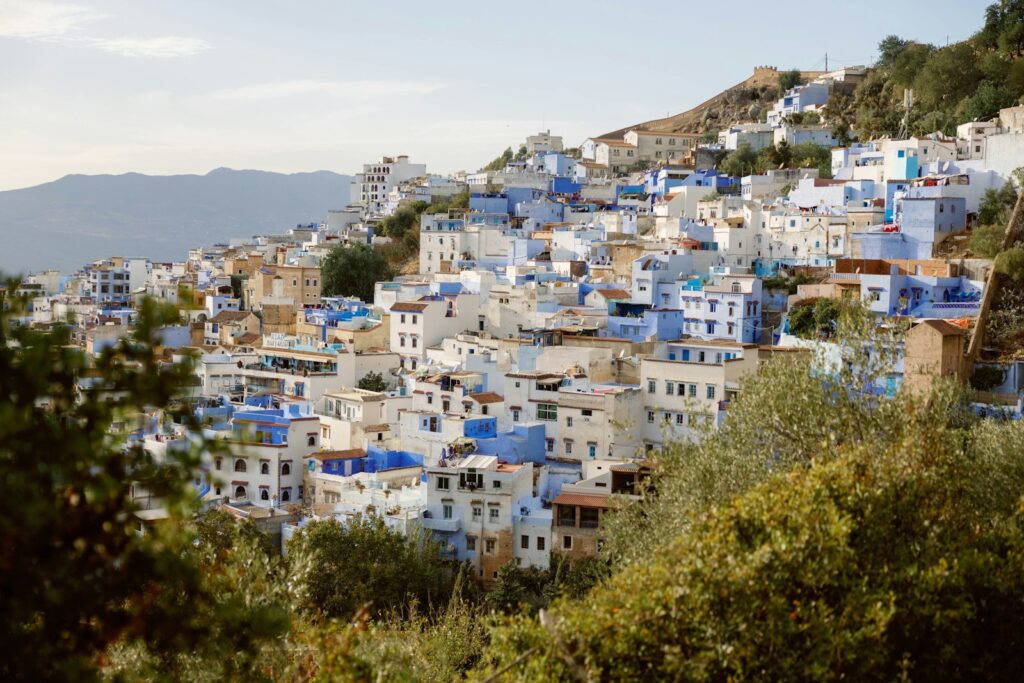
On the slopes of the Rif Mountains sits Chefchaouen, its alleys painted in every shade of blue. It is a small town best explored on foot. The finest moments are early morning, before the visitors arrive, and sunset from the Spanish Mosque on the hill opposite. One night is enough for most travelers, two if you want the calm.
The road there is mountainous and winding, and you may pass stretches where the signal drops, so download your destination and route before you set off.
Desert nights: Merzouga and the Erg Chebbi dunes
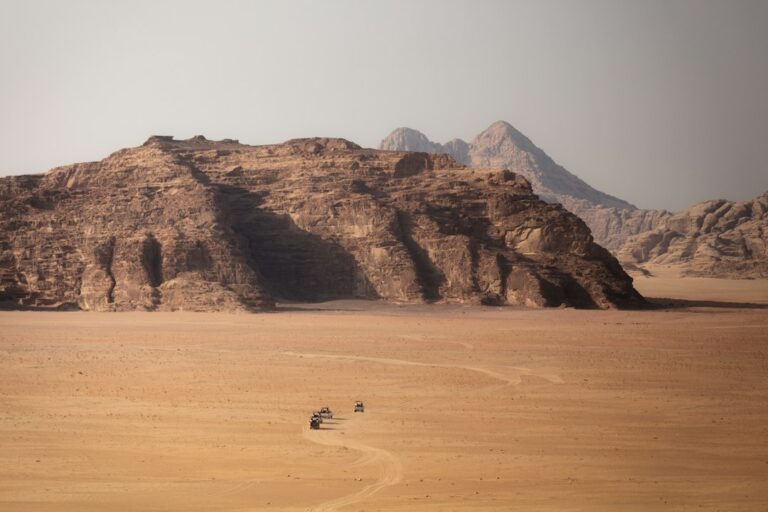
Getting to Merzouga is part of the experience. The road from Marrakech crosses the Atlas, passing through Ouarzazate, the Dades Valley and the Todra Gorge, and it is usually split over two or three days. At the end wait the golden dunes of Erg Chebbi, a camel ride at sunset, and a night in a desert camp under a sky like no other.
This stop needs more planning than the others. Coverage is good in the cities and on the main roads, but it fades deep in the dunes and in some Atlas passes, as it does for every network there. Before you leave Marrakech, download your maps, save the camp location and contact number, and charge a power bank, because electricity is limited at some camps.
A suggested route for a week or a little more
- Marrakech: three nights between the square, the souks and the gardens.
- The desert road: two nights across the Atlas and the Dades Valley, ending in a camp at Merzouga.
- Fes: two nights in the old medina.
- Chefchaouen: one night, then back through Fes or north toward Tangier.
You can also run it in reverse if you arrive from the north. The route works both ways.
How to stay connected for the whole trip
- Before you fly: install the eSIM from the Simply app at home on stable Wi-Fi, and check that your phone is on the compatible devices list.
- When you land: turn on the travel line and switch on data roaming for it only, keeping roaming off on your primary SIM. The full steps are in the eSIM installation guide.
- Your Saudi number: it stays in place and receives calls and bank verification texts as usual. The details are in Keep Your Own Number While Traveling.
- If the connection does not appear: do not delete the eSIM. Work through the eSIM troubleshooting guide step by step.
- How much data: for maps and messaging, around 1-2 GB per day is usually enough, more if you share a lot of video from the souks and the desert.
If Morocco is one stop on a longer trip through other countries, browse the multi-country bundles in the app to see which one fits your route.
Everything about staying connected there is on the Morocco page, and plans and durations are waiting in the Simply app. Enjoy the trip, from the alleys to the dunes.

Written by
Simply Team