Bosnia and Herzegovina in Late Summer: Sarajevo, Mostar and the Green Highlands
 Simply Team
5 min read
Simply Team
5 min read
When the Gulf heat peaks, Bosnia and Herzegovina becomes one of the closest places to breathe: green mountains, cold turquoise rivers, and small cities you can cross on foot. From the middle of August the season starts to soften. Crowds thin out, the highlands cool down, and the drive between Sarajevo and Mostar turns into a pleasure of its own.
Why late summer is the better window
Peak season runs from July through the first week of August, when hotels fill up and getting a table in Mostar means waiting. The second half of August through mid-September offers a calmer equation: warm days made for walking, evenings that call for a light jacket in the mountains, and far less traffic on the narrow roads. If you can push the trip to late September, there is a bonus waiting, as the forests on the Igman and Bjelasnica slopes begin to turn colour.
Sarajevo: a city you walk
Start at Bascarsija, the old Ottoman bazaar at the heart of the city. This is where you find the wooden Sebilj fountain, the Gazi Husrev-beg Mosque, and rows of cafes serving Bosnian coffee in small copper pots. Walk a few hundred metres west and you reach the Meeting of Cultures marker set into the pavement: a single step carries you from Ottoman architecture to Austro-Hungarian facades.
Give one evening to the Trebevic cable car, which lifts you above the rooftops in minutes and offers the best sunset view in the city, and one morning to the Tunnel of Hope near the airport, a small museum that explains the siege years honestly and deserves the time. Sarajevo is compact, and three unhurried days cover most of it.
Mostar and the south: the Old Bridge and beyond
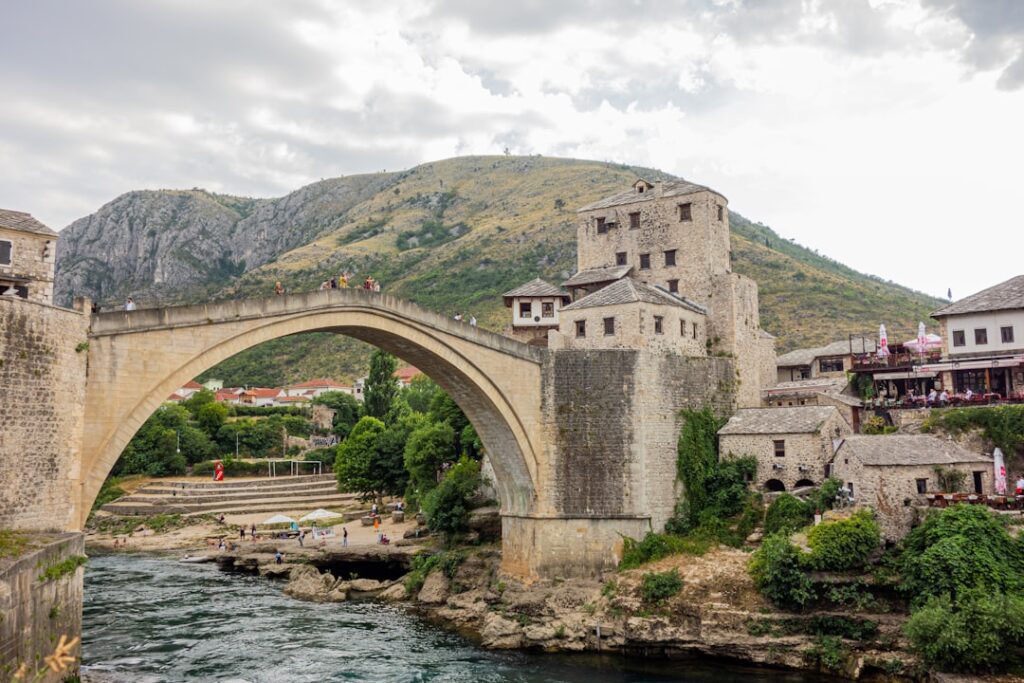
The drive from Sarajevo to Mostar takes around two and a half hours and follows the Neretva valley through scenery worth stopping for more than once. The Old Bridge is the headline, but the south hides more than that: the Kravice waterfalls for a swim on a hot afternoon, Blagaj where the Buna river emerges from under a cliff beside an old dervish lodge, and the stone town of Pocitelj looking down over the water.
One practical tip: start your Mostar day early, before the day-trip coaches arrive from the Croatian coast, then spend the middle of the day at Kravice or Blagaj away from the crowds.
The north and the highlands: Jajce, the Una and the mountains
With a full week, do not stop at the usual tourist triangle. The town of Jajce has a waterfall right in its centre, and the Pliva Lakes sit close by for quiet paddling and family boats. In the far north-west, the Una river runs turquoise through an entire national park near Bihac, which is the first choice for anyone drawn to river trips.
And if all you want is cool air, the Bjelasnica and Igman highlands are less than an hour from Sarajevo, with the stone village of Lukomir sitting up there looking as though it stopped changing centuries ago.
Practical notes before you fly
- A rental car is the best way to move around, but mountain roads are narrow and winding, so allow more time than the maps suggest.
- Halal food is widely available in Sarajevo and Mostar, and finding it takes no effort.
- The local currency is the convertible mark, and it is worth carrying cash once you head out to villages and mountain areas.
- Highland weather shifts quickly even in August, so light layers beat one heavy coat.
- A comfortable week splits well as three days in Sarajevo, two in Mostar and the south, and two for the north or the mountains.
Staying connected the whole way
Most of a Bosnia trip runs on connectivity: maps on the mountain roads, booking a Kravice tour, sharing photos with family as you go. With a Simply eSIM for Bosnia and Herzegovina you land already connected. Install the plan before you fly and activate it seconds after touchdown, with no hunting for a shop at the airport. Networks there run on 4G and cover cities and tourist areas, and it is normal for the signal to weaken in deep valleys and on mountain passes, as it does for every network in those areas, so download your offline maps before leaving Sarajevo.
If Bosnia is one stop on a wider route, the Balkans bundle covers 12 countries on a single plan, including Croatia and Montenegro, which is the sensible choice if you are crossing in from Dubrovnik or Kotor. Browse the available plans inside the app and pick the duration that matches your trip.
Before you book, confirm your handset supports the technology on the Is my phone eSIM-compatible? page, and read the Installation Guide so you know the exact steps ahead of departure. Because the eSIM runs alongside your primary SIM, your home number stays active for bank messages and important calls throughout the trip.
Bosnia is close, it is quiet at this time of year, and it asks for very little planning. Sort your connection before takeoff and leave the rest to the road.

Written by
Simply Team