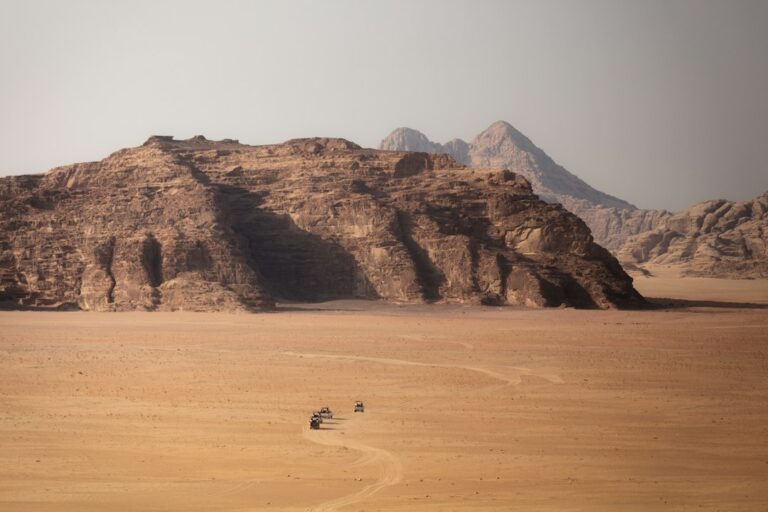
Uzbekistan in summer is hot and dry, and in winter cold enough to shorten your day. Autumn — from mid September to early November — is when the Silk Road shows itself properly: warm days that let you walk for hours between madrasas and turquoise domes, evenings cool enough for a light jacket, and markets full of pomegranates, grapes and melons at the peak of the harvest.
More to the point, this is a trip made by train rather than by plane, spread across four cities that sit far apart. Your connection needs to work while you are moving, not only in the hotel lobby.
Why autumn specifically
Summer here is a test of patience: the midday heat splits your day in two and pushes everything outdoors into the late afternoon. In autumn you get the whole day back. Visitor numbers thin out after the summer peak, and the low angled light is the best you will ever get for photographing the minarets of Bukhara or the facades of Registan. Then there is the fruit season — Uzbek melons, grapes and pomegranates turn up in every market and on every breakfast table.
Tashkent: two days before you start
Most trips begin in the capital, and two days there is plenty. Chorsu bazaar under its huge blue dome, where spices, nuts and dried fruit are sold by the kilo. A wander through metro stations that were built more like galleries, with mosaics and chandeliers. A quiet evening somewhere serving plov, the national rice dish, done the Tashkent way. Treat it as a place to reset after the flight, and start from there.
Samarkand: the turquoise heart
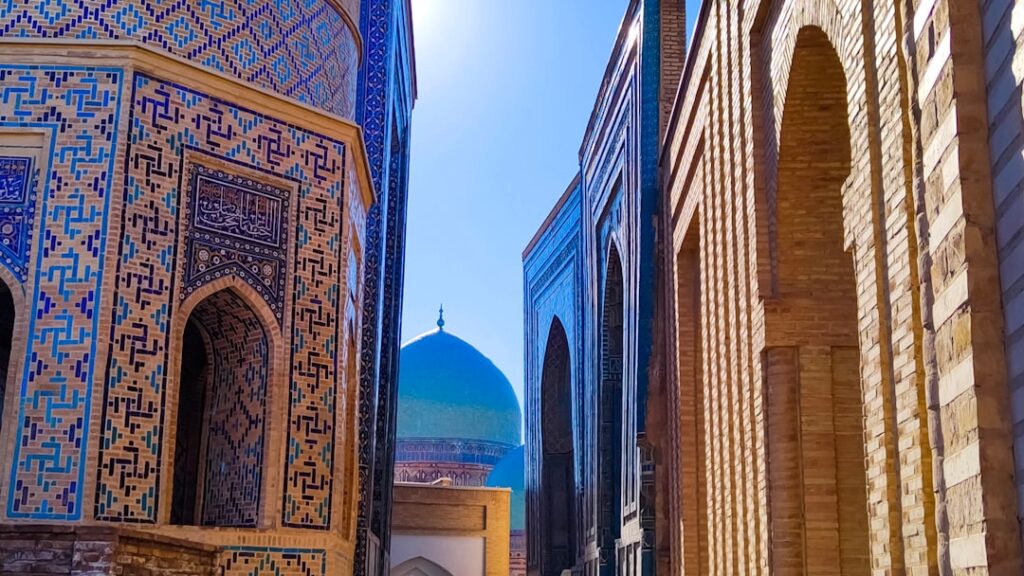
Two hours on the fast train and you are in the city people actually come for. Registan Square and its three madrasas is the view you have seen in photographs, but standing in front of it is a different thing entirely: the scale is larger than you expect, and the tilework shifts colour as the sun moves. Leave time for the Shah-i-Zinda necropolis, a narrow lane roofed in domes, and for the Bibi-Khanym mosque near the market. One practical note: visit Registan twice — once just after dawn when the square is yours alone, and once after sunset when the facades are fully lit.
Bukhara: the city that did not change
If Samarkand is an exhibition, Bukhara is a living town. The old centre is entirely walkable: the Poi Kalyan complex with the minaret that survived everything the region has been through, Lyab-i Hauz with its mulberry trees and cafes around the pool, and the Ark fortress at the edge. Autumn is Bukhara at its best — long shadows, and cafes around the water that open into the evening instead of hiding from the heat.
Khiva: the city inside the wall
Khiva sits further out — an overnight train from Tashkent, or the road across the desert from Bukhara. It repays the effort: Itchan Kala, the inner town enclosed by a complete mud brick wall, crosses end to end in half an hour and looks at sunset as though nobody has altered it in centuries. One night inside the walls is enough, but it is a night you will remember.
The train is your transport
The Afrosiyob fast train links Tashkent with Samarkand and Bukhara, and it beats domestic flights on both speed and comfort once airport time is counted. Book early: autumn seats go first because it is the season everyone wants. Tickets live on your phone, and so do maps and sign translation — most signage is in Uzbek and Russian — which is exactly what makes data that works from the moment you land a practical need rather than a luxury.
The connectivity plan
The Uzbekistan plan runs on 4G networks covering Tashkent, Samarkand, Bukhara and the main cities. Coverage is solid inside the cities and along the rail lines, and it can weaken across the long desert stretches, particularly on the way to Khiva. The fix is simple: download offline city maps before any long overland leg and the rest takes care of itself.
One detail that puts people at ease: your primary SIM stays where it is. It keeps receiving your calls and your banking verification messages as usual, while your data runs over the travel eSIM. Tracking your usage or adding another plan halfway through the trip is all handled inside the app. Check the available plans in the app before you travel.
One last step before takeoff: install your plan while you are on a network you trust, not in the arrivals hall at Tashkent after a long flight. Check first that your device supports the technology on the compatible devices page, then read the installation guide so you know the steps exactly. The rest — the domes, the bazaars and the pomegranate season — is waiting.

Written by
Simply Team